Memory-driven anomaly puzzles set in uneasy domestic scenes
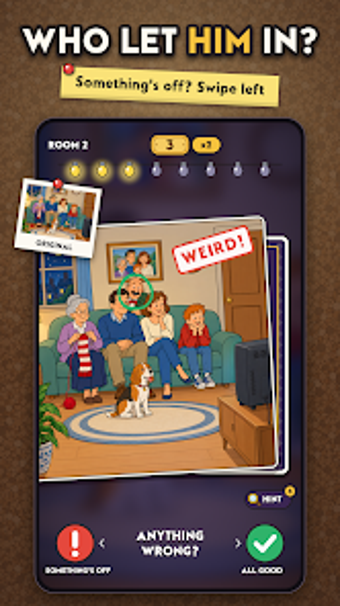
Places you in a domestic scene to memorize an original room, then forces recall as later frames introduce subtle changes. Anomaly Room, from developer pplcf, mixes observation puzzles with a light psychological edge on Android. The game uses swipe-based controls, an eight-correct streak requirement, and a magnifier tool for difficult details. It fits players who enjoy memory tests, spot-the-difference challenges, and mildly eerie atmospheres that reward careful attention.
What kind of game asks you to rely on pure memory?
The game centers on memory-based observation rather than side-by-side comparison: you study a single original room, then judge subsequent frames from recall. This design makes the core loop a strict test of attention because you must get eight consecutive identifications to solve a case, and a single mistake resets the sequence. The consequence-driven loop turns each decision into a measurable risk-reward moment.
How do mechanics and tools shape the challenge?
The game uses simple swipe controls, left for anomalies and right for normal, and a magnifier tool for detailed inspection. A light-bulb streak indicator tracks up to eight correct answers, which creates short, tense sessions that reward uninterrupted focus. The integrated replay system highlights missed differences, so each failure converts into a concrete learning moment rather than an unexplained penalty.
What does the game feel and look like while you play?
The rooms mix 2D and 3D elements to build a cozy but slightly unsettling atmosphere. Background characters and pets appear in domestic settings, and changes are often subtle, lending a quiet tension to observation. Sound design supports that mood without relying on jump scares, so the experience leans toward slow vigilance instead of sudden shocks.
A focused pick for players who enjoy patient observation and deliberate challenge
Anomaly Room rewards steady attention and memory, so it suits players who like short, high-consequence rounds of puzzle work rather than long sessions. Some players may find the eight-in-a-row requirement demanding because a single mistake restarts progress. For anyone who prefers learning from failure and a quiet, eerie presentation, the game offers a clear, repeatable challenge that trains visual recall.